
By: Allison Magee, President and Executive Director, Zellerbach Family Foundation
“We have people all over the world coming to see our youth justice system and we never see them again…what we felt today [from our Bay Area visit] is the world getting smaller…(and) what we experienced hit hard. It was like seeing our own culture and cultural norms through a different lens. But it was the same lens because it was the lens of humanity.”
Last month, we had the honor of welcoming a delegation of youth court judges from New Zealand, led by the country’s principal judge of youth courts, to the Bay Area. This was also the first time the Journey to Justice participants had reunited since our trip to New Zealand, also known as Aotearoa, over a year ago. We returned from that trip feeling deeply inspired by New Zealand’s culturally responsive approaches to serving young people that are rooted in community, care, and long-held Māori culture; and we were eager to continue the transformational work that connected us across the globe.
What connected us with our New Zealand colleagues across cultures and time zones is our shared commitment to the well-being of young people. The restorative justice practices that have grown popular across youth and family serving systems and youth organizations originated with the Māori people before they were exported from New Zealand to western countries. New Zealand has spent decades adapting its youth justice system to incorporate the practices that divert youth from detention, leaning heavily on restorative principles, and inviting families and communities in all of their interactions and processes.
This time, the judges traveled over 6,000 miles to learn more about San Francisco and Alameda Counties’ efforts to transform the region’s juvenile justice systems. Their visit began at the San Francisco Juvenile Justice Center for a court observation with Judge Roger Chan and a presentation highlighting San Francisco’s Juvenile Services Care Coordinating model, built in partnership between San Francisco Juvenile Probation, the Department of Children, Youth, and Families, and the City’s vast network of community providers.
The judges also met with Alameda County system leaders to discuss opportunities and challenges that come with reshaping a youth justice system, including the development of the Ubuntu Initiative, encompassing the county’s diversion, reentry, and intensive coordination efforts. The highlight of their visit was an observation of the Indaba. Inspired by New Zealand’s work and replicating its Family Group Conferencing (FGC) model, the Indaba is a culturally grounded, community-based restorative process that serves as a powerful alternative to formal justice proceedings.
Before they returned home, the judges gathered in celebration with their growing Bay Area whānau, or extended family, including the many colleagues and partners who went on the journey to New Zealand last Spring. We’ve worked hard to sustain and build the partnerships we cultivated there, while renewing our shared commitment to young people, regardless of city or county or country.
What started as a group of people interested in broadening their perspectives has become a community that’s changed how San Francisco and Alameda County system leaders work together to support young people. It’s also a budding international exchange, and we are just getting started. We look forward to growing our relationship, forming new ways for our youth and communities to heal, and learning from one another to ensure justice for all of our young people.
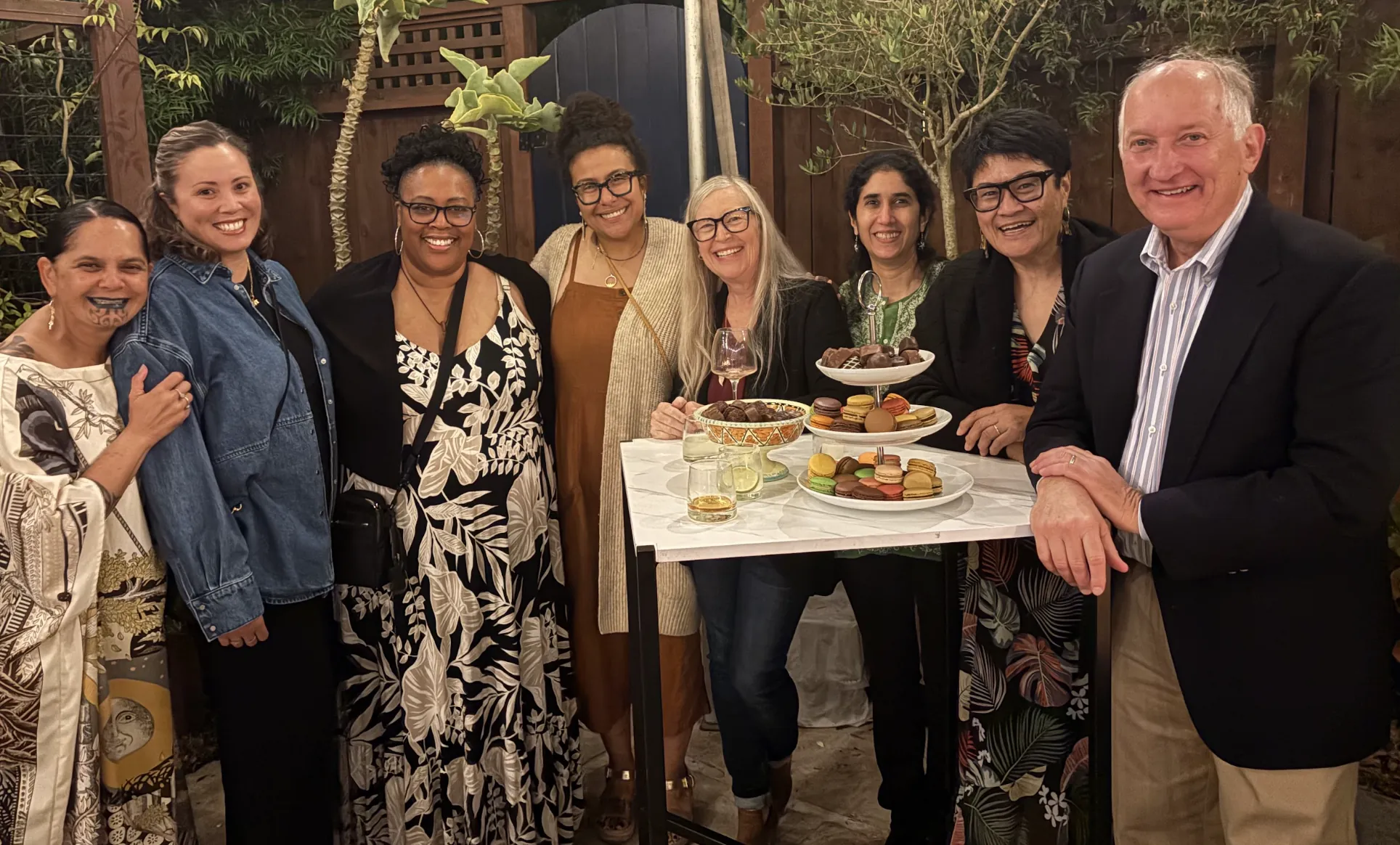
Visiting youth court judges from New Zealand with Journey to Justice participants.